When Wiring Becomes the Failure Point
Read Below
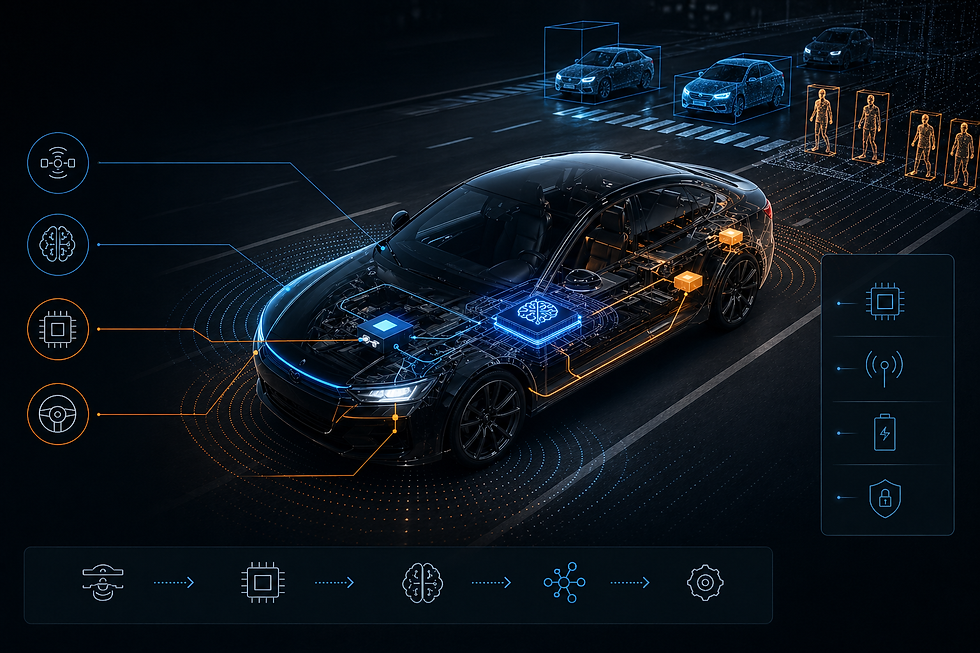
Industrial systems are evolving into distributed industrial architectures where interconnect behavior directly influences reliability, synchronization and operational stability.
As edge AI, industrial Ethernet and distributed sensing expand, connector integrity, grounding continuity and shielding quality increasingly affect signal integrity and communication reliability, control precision and long-term system performance.
McKinsey Electronics supports industrial programs through engineering-led component selection, lifecycle-aware sourcing and structured access to reliable interconnect and semiconductor technologies.

Industrial systems are entering a phase where electrical interconnect architecture is becoming inseparable from system reliability itself.
For decades, industrial engineering focused primarily on processing capability, controller reliability and software integration. Wiring infrastructure was often treated as a secondary implementation layer deemed necessary, but fundamentally passive. That assumption is becoming increasingly inaccurate.
Modern industrial platforms now depend on highly distributed electrical ecosystems composed of edge processors, machine vision systems, industrial Ethernet networks, remote I/O modules, AI-enabled sensors, predictive maintenance nodes and high-speed communication layers operating simultaneously across harsh environments. In these systems, physical interconnect behavior directly affects how reliably data is transmitted or propagated, synchronizes and propagates throughout the architecture.
The consequence is significant. Reliability problems are increasingly emerging not only from processor instability or software failure, but from degradation within the physical infrastructure carrying power, signals and data across the system.
The modern industrial challenge is no longer simply computational performance. It is maintaining electrical consistency across thousands of physical interfaces operating continuously under vibration, thermal cycling, electromagnetic interference and lifecycle stress.
Industrial Systems Are Becoming More Distributed
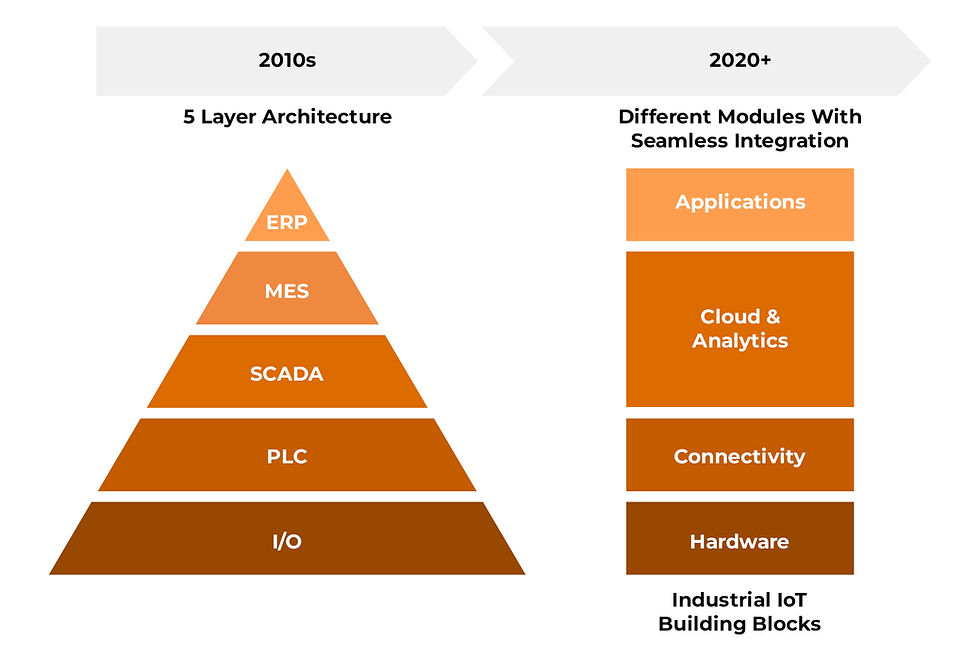
Traditional industrial automation architectures were relatively centralized. A PLC cabinet controlled most operational logic while field devices remained comparatively limited in both number and communication complexity. Signal pathways were shorter, communication speeds were lower and physical interconnect density remained manageable.

Modern industrial environments are fundamentally different.
Distributed sensing, edge computing and real-time analytics are pushing intelligence closer to the machine layer itself. Instead of a small number of centralized control interfaces, facilities now contain extensive networks of distributed sensor nodes, industrial Ethernet switches, remote processing modules and interconnected subsystems continuously exchanging operational data.
This architectural shift dramatically increases dependence on interconnect integrity.
A modern production environment may contain:
thousands of connector interfaces,
multiple industrial communication protocols,
high-speed deterministic Ethernet,
mixed power and signal routing,
and extensive branching topologies across physically constrained installations.
Under these conditions, the interconnect layer becomes an increasingly critical determinant of overall system performance. It becomes an active determinant of system behavior.
Even minor physical inconsistencies can now influence:
synchronization stability,
sensor fidelity,
communication determinism,
EMI susceptibility,
predictive maintenance data quality,
and control-loop consistency.
This is particularly important in systems relying on deterministic communication protocols such as EtherCAT, PROFINET and Time-Sensitive Networking (TSN), where timing precision and signal integrity directly affect operational stability.
Older industrial systems could tolerate substantial electrical noise and intermittent physical inconsistencies without major operational consequences. Modern distributed systems increasingly cannot.
Evolution of Industrial Architectures
Data Integrity Now Begins at the Physical Layer
One of the most important shifts occurring across industrial systems is the relationship between physical interconnect stability and operational data integrity.
AI-driven maintenance systems, edge analytics platforms and real-time industrial monitoring all assume that sensor data entering the system is electrically stable and temporally consistent. In practice, however, the quality of this data increasingly depends on the physical behavior of connectors, shielding structures and grounding continuity across distributed installations.
A connector does not need to fail completely to destabilize a system.
Small increases in contact resistance, intermittent shielding discontinuity or minor impedance irregularities may introduce signal degradation that remains electrically subtle while still affecting higher-level system behavior. These issues may appear as:
unstable sensor readings,
intermittent communication retries,
timing jitter,
corrupted edge inference,
or inconsistent machine behavior.
In predictive maintenance systems, this becomes particularly problematic. Machine learning models often interpret electrical instability as operational deviation, potentially generating false maintenance indicators or masking genuine equipment degradation.
As industrial AI adoption accelerates, physical interconnect consistency increasingly becomes part of the data integrity problem itself.
This represents a major shift in industrial reliability engineering. Historically, data quality was largely treated as a software or sensing issue. Modern architectures reveal that data integrity frequently begins much earlier, at the connector interface itself.
Connector Density Is Reshaping PCB Reliability
The interconnect challenge extends beyond field wiring into board-level system architecture.
Industrial edge systems are simultaneously becoming smaller, more thermally dense, higher in bandwidth, and more electrically integrated
This creates substantial pressure on PCB connector architecture.
As the connector pitch decreases and I/O density rises, electrical and mechanical interactions become significantly more complex. High-density interconnect regions increasingly influence thermal concentration, grounding behavior and electromagnetic coupling inside compact industrial systems.
Connector placement now affects return current paths, shield continuity, localized heating, signal crosstalk, vibration stress transfer and airflow distribution.
This is especially critical in systems combining high-speed communication, switching power electronics, motor control, RF connectivity and sensitive analog sensing within the same enclosure.
The result is that connector architecture is increasingly a system-level electrical engineering discipline, rather than simply being a packaging decision.
Connector Density vs Thermal and EMC Risk

Why Interconnect Failures Are Difficult to Trace
Unlike catastrophic semiconductor failure, interconnect degradation is often intermittent, gradual and operationally inconsistent.
This makes troubleshooting particularly difficult.
A system may pass commissioning successfully, operate reliably for months and later begin exhibiting sporadic instability that appears unrelated to physical infrastructure. The root cause may originate from micro-level degradation mechanisms occurring inside connectors or cable assemblies over time.
Several mechanisms commonly contribute to this reliability drift.
Fretting corrosion occurs when micro-motion caused by vibration gradually degrades mating surfaces, increasing contact resistance and intermittently destabilizing signal continuity. Thermal cycling continuously stresses solder joints, crimps and connector interfaces through repeated expansion and contraction. Repeated maintenance interaction reduces mating force consistency while environmental contamination introduces additional variability into contact behavior.
These effects rarely produce immediate failure. Instead, they gradually alter the electrical characteristics of the system over time.
This is one of the most under-discussed reliability challenges in industrial electronics today: systems increasingly drift away from their originally qualified electrical state long before complete component failure occurs.
The infrastructure remains operational; however, it is no longer electrically identical to the validated architecture originally commissioned.
Reliability Is Moving Beyond the Semiconductor
The semiconductor industry has spent decades optimizing computational reliability, processing efficiency and device-level performance. Industrial systems today contain extraordinarily capable processors, communication ICs and embedded platforms. Yet operational instability increasingly originates elsewhere.
As automation systems become more distributed and interconnected, physical infrastructure now governs how effectively those semiconductor technologies perform in real operating environments.
This is why industrial engineering teams are increasingly shifting toward lifecycle-oriented interconnect strategies, emphasizing vibration-resistant architectures, structured grounding design, deterministic shielding continuity, modular serviceability, installation repeatability and traceable sourcing.
Interconnect infrastructure is becoming part of the operational assurance strategy itself.
This shift is especially visible across industrial automation, transportation systems, energy infrastructure, aerospace electronics and defense platforms, where systems must maintain electrical stability across extended operational lifecycles under mechanically and environmentally stressful conditions.
The broader industry trend is clear: reliability is no longer defined only by semiconductor quality. It is increasingly determined by how consistently the entire electrical architecture behaves over time.
In distributed industrial systems, wiring is much more than a passive infrastructure, it becomes a foundational enabler of the intelligence layer itself.
Long-term reliability in industrial and high-reliability electronic systems depends on the quality of individual components as well as on disciplined sourcing, lifecycle planning and technology selection. Dubai-based McKinsey Electronics supports engineering teams across the region with engineering-led component selection, lifecycle-aware sourcing strategies and structured access to authorized interconnect and semiconductor technologies, helping organizations in the Middle East, Africa and Türkiye maintain traceability, design continuity and dependable system performance throughout the product lifecycle.