
Automotive Semiconductor Reliability Under AI Workloads: Thermal Stress, Lifetime Degradation and Qualification Gaps
Read Below
Automotive semiconductors under AI workloads face sustained thermal stress, shifting reliability limits from signal integrity to lifetime degradation.
Traditional qualification frameworks do not fully reflect continuous, high-load operating conditions and evolving failure mechanisms.
McKinsey Electronics supports system-level reliability approaches, aligning compute, thermal and lifecycle considerations for next-generation automotive platforms.
Automotive semiconductor design has historically been governed by predictability. Electronic control units (ECUs) operate under well-defined duty cycles, bounded thermal excursions and deterministic workloads. Reliability frameworks, qualification standards and validation methodologies have all evolved around these assumptions.

The integration of AI into automotive systems disrupts this foundation. Advanced driver-assistance systems (ADAS), autonomous driving stacks and in-vehicle perception engines introduce continuous, high-intensity computational workloads that fundamentally alter how semiconductors are stressed over time.
This shift is not incremental. It changes the dominant failure mechanisms from event-driven to time-accumulated degradation, where sustained thermal and electrical stress becomes the primary determinant of device lifetime. As a result, reliability can no longer be treated as a static property verified through standardized tests. It must be understood as a dynamic function of workload, temperature and system architecture.
Workload Transformation: From Intermittent Control to Continuous Compute
Traditional automotive electronics are characterized by intermittent activity. Control loops execute periodically and peak power events are short-lived. Between these events, devices operate at reduced load, allowing thermal relaxation and limiting cumulative stress.
AI workloads eliminate this temporal separation. Inference engines for vision, sensor fusion and decision-making operate continuously during vehicle operation. Compute units remain active for extended durations, often at high utilization levels. The resulting power profile is not defined by peaks, but by sustained plateaus of elevated consumption.

This transition has two immediate consequences. First, the average junction temperature increases, even if peak temperatures remain within specification. Second, the absence of cooling intervals prevents recovery from thermal stress, accelerating degradation mechanisms that depend on both temperature and time.
Thermal Stress as the Primary Reliability Driver
In semiconductor devices, temperature is one of the most significant factors influencing long-term reliability. The relationship between temperature and failure rate is governed by thermally activated processes, commonly described by Arrhenius-type behavior. As junction temperature rises, the rate of degradation mechanisms increases exponentially.

Under AI workloads, the concern is not only peak temperature but sustained thermal exposure. Even moderate increases in average junction temperature can significantly reduce lifetime when maintained over long durations. Unlike transient thermal events, which contribute minimally to cumulative damage, continuous operation at elevated temperature accelerates wear-out mechanisms across the device.
Additionally, modern automotive processors exhibit significant spatial variation in power density. AI accelerators, memory interfaces and interconnect fabrics generate localized hotspots, leading to non-uniform temperature distribution across the die. These gradients introduce mechanical stress at material interfaces and exacerbate localized aging, making failure modes more difficult to predict using traditional uniform-temperature assumptions.
Coupled Degradation Mechanisms Under Sustained Load
The reliability challenge under AI workloads is not driven by a single failure mechanism, but by the interaction of multiple thermally and electrically activated processes.
Electromigration becomes more severe as sustained current densities increase in advanced interconnect structures. Unlike intermittent loads, continuous current flow reduces opportunities for stress relaxation and accelerates material transport within metal lines, eventually leading to open or short failures.
At the transistor level, bias temperature instability gradually shifts threshold voltages under prolonged voltage and temperature stress. In digital logic, this manifests as timing degradation, reducing margin in critical paths. In tightly optimized AI accelerators, where timing closure is already constrained, these shifts can accumulate into functional failures over time.
Simultaneously, thermal gradients introduce mechanical stress at the package and interconnect interfaces. Even in the absence of large external temperature swings, localized heating and cooling cycles at the micro-scale lead to fatigue in solder joints and interconnect structures.
The key issue is that these mechanisms reinforce one another. Elevated temperature accelerates electromigration and transistor aging, while electrical stress contributes additional heat generation. The result is a coupled degradation process that is inherently non-linear and difficult to extrapolate using traditional models.
Limitations of Existing Qualification Frameworks
Automotive semiconductor qualification standards such as AEC-Q100 are designed to ensure robustness under a defined set of stress conditions.

Tests such as high-temperature operating life (HTOL), temperature cycling, and electrical overstress are intended to simulate long-term usage within acceptable margins.
However, these methodologies are based on assumptions that may not fully capture the operating characteristics of AI-driven systems. They typically model operation as a combination of elevated stress conditions and conservative duty cycles, rather than continuous high-load scenarios with complex spatial and temporal variations.
The gap becomes evident when considering that qualification tests:
Do not explicitly model workload-induced hotspot formation and non-uniform power density Do not fully capture workload-dependent switching activity.
Approximate lifetime using accelerated conditions that may not reflect real usage patterns.
As a result, compliance with existing standards does not necessarily guarantee reliability under sustained AI workloads. This does not invalidate the standards, but it highlights the need for supplementary validation approaches that incorporate realistic workload profiles and thermal conditions.
Toward Reliability-Aware System Co-Design
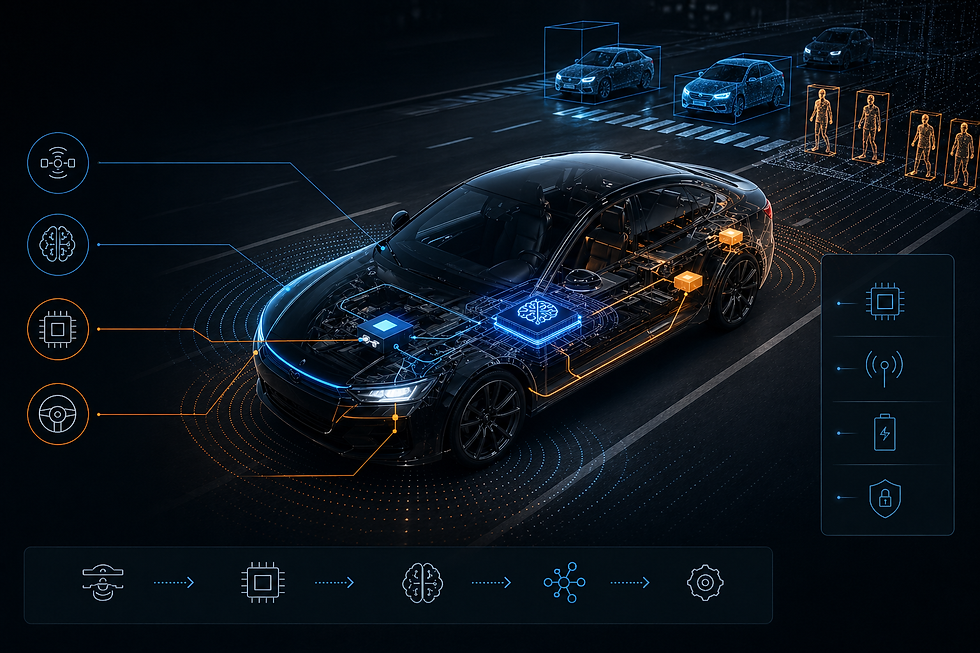
Addressing these challenges requires a shift from component-level optimization to system-level co-design, where compute architecture, thermal management and reliability modeling are developed in parallel.
In this approach, workload characteristics are treated as first-class design inputs. AI inference patterns, utilization profiles and data-dependent behavior are incorporated into thermal simulations and lifetime models. This enables designers to predict not only peak performance, but also long-term degradation under realistic operating conditions.
At the same time, real-time monitoring and adaptive control mechanisms can be used to manage thermal stress dynamically. Techniques such as workload throttling, dynamic voltage and frequency scaling (DVFS) and thermal-aware scheduling allow systems to operate within safe limits while maintaining performance targets.
This represents a fundamental shift in design philosophy. Reliability is no longer verified solely through pre-deployment testing; it is actively managed throughout the system’s operational lifetime.
AI-driven workloads are redefining the reliability envelope of automotive semiconductors, exposing limitations in traditional design assumptions and qualification frameworks. Sustained thermal stress, coupled degradation mechanisms and advanced packaging constraints require a transition toward system-level reliability engineering.
This transition is not purely technical. It requires alignment between semiconductor design, system architecture and long-term product strategy. McKinsey Electronics plays a critical role in this context by providing the system-level perspective needed to translate evolving reliability constraints into scalable design methodologies and qualification strategies, ensuring that next-generation automotive platforms meet both performance and lifetime requirements.


