
June 2026 Updates for Design Engineers
Read the latest semiconductor and electronics news and updates.
In this edition:
Stargate UAE Signals a New Phase for AI Infrastructure in the Middle East
From Regional Cloud Provider to Global AI Infrastructure Operator: Core42's Expanding Ambitions
Global AI Show Riyadh Highlights Saudi Arabia's Growing Focus on AI Infrastructure
Stargate UAE Signals a New Phase for AI Infrastructure in the Middle East
Artificial intelligence is no longer defined solely by algorithms and foundation models. Increasingly, competitive advantage depends on access to large-scale computing infrastructure capable of supporting model training, inference and data-intensive AI workloads. As nations seek greater control over their digital futures, sovereign AI infrastructure is becoming a strategic asset. The Stargate UAE initiative is one of the clearest examples of this trend and is rapidly positioning the country as a major AI infrastructure hub.

Led by G42 and developed in partnership with OpenAI, Oracle, NVIDIA, Cisco and SoftBank Group, Stargate UAE forms part of the broader UAE–US AI Campus in Abu Dhabi. The project will initially deploy a 200-megawatt AI compute cluster before scaling toward a 1-gigawatt infrastructure platform, making it one of the largest AI computing deployments outside the United States. The wider campus is expected to support up to 5 gigawatts of data center capacity, creating a foundation for nation-scale AI development across multiple industries.
What makes Stargate UAE particularly significant is the technology stack that supports its deployment. NVIDIA is expected to provide its latest Grace Blackwell GB300 AI systems, designed specifically for large language models, generative AI and advanced reasoning workloads. These systems combine high-performance GPUs, advanced memory architectures and ultra-fast interconnect technologies to deliver the massive computational throughput required by modern AI models. Industry reports indicate that the initial deployment could involve approximately 100,000 advanced AI processors distributed across more than a thousand AI servers.
However, AI accelerators represent only one part of the infrastructure challenge. Large-scale AI clusters require extensive supporting semiconductor ecosystems, including high-bandwidth memory (HBM), high-speed networking silicon, optical interconnects, power management ICs, voltage regulators, timing devices and advanced cooling systems. Cisco's involvement highlights the growing importance of AI-ready networking architectures that can move data among tens of thousands of GPUs while maintaining low latency and high reliability. Oracle will contribute cloud infrastructure and operational capabilities, while OpenAI will leverage the platform to expand access to advanced AI services throughout the region.
The project also reflects the UAE's broader strategy to establish sovereign AI capabilities. Rather than relying entirely on overseas cloud resources, governments and enterprises increasingly seek local compute infrastructure to address data residency requirements, cybersecurity concerns and national digital transformation goals. For sectors such as healthcare, energy, financial services, transportation and advanced manufacturing, local access to AI infrastructure can significantly reduce latency while improving regulatory compliance and operational resilience.
For the regional electronics and semiconductor ecosystem, Stargate UAE signals a substantial increase in demand for advanced components that enable AI infrastructure. Beyond processors, future deployments will require high-performance power conversion systems, thermal management technologies, connectivity solutions, embedded controllers, storage subsystems and supporting passive components.
As organizations across the Middle East accelerate investments in AI-enabled infrastructure, engineering-led distributors such as McKinsey Electronics play an increasingly important role in helping customers access the technologies that support these deployments. Through its partnerships with top-tier semiconductor and electronic component manufacturers, McKinsey Electronics supports regional developers, system integrators and infrastructure providers with component selection, design support and supply-chain access across the technologies that underpin next-generation AI systems.
From Regional Cloud Provider to Global AI Infrastructure Operator: Core42's Expanding Ambitions
For years, discussions about artificial intelligence infrastructure have largely centered around hyperscale cloud providers headquartered in the United States. Companies such as Amazon Web Services, Microsoft Azure and Google Cloud established the foundation upon which modern AI applications were built. However, a new generation of AI infrastructure providers is beginning to emerge, and among the most notable is Core42, G42's sovereign cloud and AI infrastructure company headquartered in Abu Dhabi.

Recent expansion initiatives demonstrate that Core42 is no longer focused solely on serving domestic or regional demand. The company is actively extending its AI infrastructure footprint into international markets, reflecting a broader shift in the UAE's role within the global AI ecosystem. Rather than simply consuming advanced technologies developed elsewhere, the country is increasingly positioning itself as a provider of AI compute, cloud infrastructure and digital services on a global scale.
At the center of Core42's strategy is the ability to deploy and operate large-scale AI environments optimized for modern machine learning workloads. Unlike traditional cloud infrastructure, AI computing platforms require specialized architectures built around GPU clusters, accelerated networking fabrics, high-bandwidth memory systems and advanced storage technologies. These environments are designed to support increasingly complex foundation models, generative AI applications and enterprise-scale inference workloads that place enormous demands on compute resources. Through partnerships across the G42 ecosystem, Core42 has developed expertise in deploying infrastructure powered by advanced semiconductor platforms from companies such as NVIDIA, while integrating cloud services, networking technologies and AI software stacks into unified computing environments.
One of the most important aspects of Core42's international expansion is the growing recognition that AI infrastructure has become a strategic national capability. Governments and enterprises are increasingly seeking sovereign cloud and AI environments that provide greater control over data residency, cybersecurity and regulatory compliance. This is particularly relevant for sectors such as healthcare, financial services, government, energy and critical infrastructure, where access to secure, high-performance compute resources is becoming essential for digital transformation initiatives and AI adoption strategies.
Beyond cloud services, Core42's growth is expected to stimulate demand for supporting technologies throughout the semiconductor ecosystem. Every AI data center deployment requires high-efficiency power conversion systems, advanced cooling technologies, optical networking equipment, storage platforms and thousands of supporting electronic components. The resulting demand extends far beyond AI accelerators, creating opportunities across the broader value chain that includes networking silicon, power management integrated circuits, timing devices, memory technologies such as HBM, and the passive components required to support increasingly power-dense computing architectures.
For McKinsey Electronics, developments such as Core42's international expansion reflect the growing importance of advanced semiconductor and electronic component technologies throughout the AI infrastructure sector. From power management and connectivity solutions to embedded systems and supporting passive components, AI computing environments rely on a broad ecosystem of technologies working together. As investments in AI infrastructure continue to accelerate across the Middle East, Africa and Türkiye, McKinsey Electronics supports customers with engineering expertise, component selection guidance and access to technologies that enable the next generation of high-performance computing platforms.
Global AI Show Riyadh Highlights Saudi Arabia's Growing Focus on AI Infrastructure
On June 23-24, Riyadh hosted the Global AI Show 2026, bringing together AI developers, cloud providers, infrastructure operators, investors and policymakers to discuss the next phase of artificial intelligence deployment. A recurring theme throughout the event was the growing importance of sovereign AI compute capacity and the infrastructure required to support national AI ambitions.
The discussions come as Saudi Arabia continues to expand its investments in AI through initiatives linked to Vision 2030 and the Public Investment Fund (PIF). Particular attention was given to the computing resources needed to support large language models, enterprise AI applications and future digital services. Industry participants highlighted the need for advanced data centers, AI-ready cloud environments and large-scale GPU infrastructure capable of supporting increasingly demanding AI workloads.
The event also reflected growing momentum behind Saudi Arabia's efforts to establish domestic AI infrastructure rather than relying exclusively on overseas compute resources. This includes investments in data center capacity, cloud services and advanced computing platforms designed to support government, industrial and commercial AI initiatives. Such infrastructure requires a combination of AI accelerators, high-bandwidth memory (HBM), high-speed networking technologies and sophisticated power and cooling systems.
The discussions in Riyadh also highlight the growing competition among countries to develop local AI capabilities and secure access to advanced computing resources. Similar initiatives are underway across the Gulf region, including major AI infrastructure projects in the UAE, reflecting a broader shift toward regional ownership of AI compute capacity and cloud infrastructure.
For McKinsey Electronics, developments such as those discussed at Global AI Show Riyadh reinforce the increasing importance of advanced semiconductor technologies in enabling AI infrastructure. From power management and connectivity solutions to embedded systems and passive components, the deployment of AI computing environments depends on a wide range of technologies that support performance, efficiency and scalability across modern data center architectures.
QAI Advances Qatar's Sovereign AI Infrastructure Strategy
During June 2026, Qatar continued advancing its AI infrastructure ambitions through QAI, the national artificial intelligence company backed by the Qatar Investment Authority (QIA). The initiative is focused on developing the computing infrastructure, technology partnerships and operational capabilities required to support AI development within the country. The strategy reflects Qatar's objective to strengthen domestic AI capabilities while reducing reliance on external compute resources and cloud platforms.

A key part of QAI's mission is the development of high-performance computing infrastructure capable of supporting AI model training and inference workloads. As governments and enterprises deploy increasingly sophisticated AI applications, access to compute capacity has become a strategic requirement. This includes investments in data centers, cloud infrastructure and AI computing platforms designed to support national digital transformation initiatives.
These environments rely on a complex semiconductor ecosystem. Modern AI infrastructure is typically built around GPU accelerators, high-bandwidth memory (HBM), high-speed storage and advanced networking technologies such as InfiniBand and AI-optimized Ethernet fabrics. Supporting systems include power management integrated circuits, voltage regulators, timing devices, optical interconnects and thermal management technologies that enable large-scale computing environments to operate efficiently and reliably.
QAI's continued expansion also highlights the importance of international technology partnerships. Developing AI infrastructure at scale requires access to advanced semiconductor platforms, cloud technologies and engineering expertise. As a result, national AI programs increasingly combine local investment with collaboration across the global technology ecosystem.
The initiative places Qatar alongside other Gulf countries investing heavily in AI infrastructure, including the UAE through G42 and Core42 and Saudi Arabia through HUMAIN. Together, these projects reflect a regional shift toward building local AI compute capacity and data center infrastructure as part of broader economic and technology development strategies.
Initiatives such as QAI demonstrate how AI infrastructure investment is driving demand for a wide range of electronic technologies beyond processors alone. High-performance computing platforms require advanced connectivity, power management, timing and supporting component technologies. As AI infrastructure projects continue to develop across the Middle East, McKinsey Electronics supports customers through engineering expertise and access to the technologies that help enable next-generation computing environments.
Oracle Expands Cloud Infrastructure Presence in Morocco
Oracle continued expanding its presence in Morocco through its Oracle Cloud Infrastructure (OCI) region in Casablanca, strengthening the country's position as a growing technology and cloud services hub for North Africa. Developed in partnership with N+ONE Datacenters, the facility provides local access to Oracle cloud services while enabling organizations to meet data residency and sovereign hosting requirements.

The launch supports the Digital Morocco 2030 strategy, which aims to accelerate digital transformation across government and industry while attracting international technology investment. Through the Casablanca region, organizations can access Oracle's cloud platform, database services, analytics tools and AI capabilities without hosting critical data outside the country. The infrastructure is expected to support customers across government, financial services, telecommunications, manufacturing and technology sectors.
The investment also reinforces Morocco's role as a strategic technology gateway between Africa and Europe. As demand for cloud services grows, global providers are investing in regional infrastructure that reduces latency, improves compliance with local regulations and supports AI-enabled applications. Oracle's decision to establish local cloud capacity reflects growing confidence in Morocco's digital infrastructure, connectivity and long-term technology strategy.
For the semiconductor industry, cloud regions translate into demand for servers, storage systems, networking equipment and data center hardware. As AI becomes part of enterprise cloud services, these facilities require higher compute density, stronger power architectures, faster interconnects and more resilient infrastructure components.
The expansion of cloud infrastructure across North Africa is creating new requirements for enterprise hardware, networking platforms, power systems and supporting electronic technologies. As organizations deploy AI workloads, migrate applications to the cloud and invest in local data hosting capabilities, demand is expected to increase across the broader electronics ecosystem. Through its presence across North Africa and partnerships with global semiconductor and technology manufacturers, McKinsey Electronics continues to support the growing infrastructure technologies supporting cloud, AI and data center projects throughout the region.
Türkiye Advances Semiconductor Manufacturing Through HIT-30
Semiconductor manufacturing has become one of the central pillars of Türkiye's industrial strategy. Through its HIT-30 High Technology Investment Program, the Turkish government is offering approximately US$30 billion in incentives aimed at attracting investment into semiconductors, advanced electronics, battery production and other strategic technology sectors.
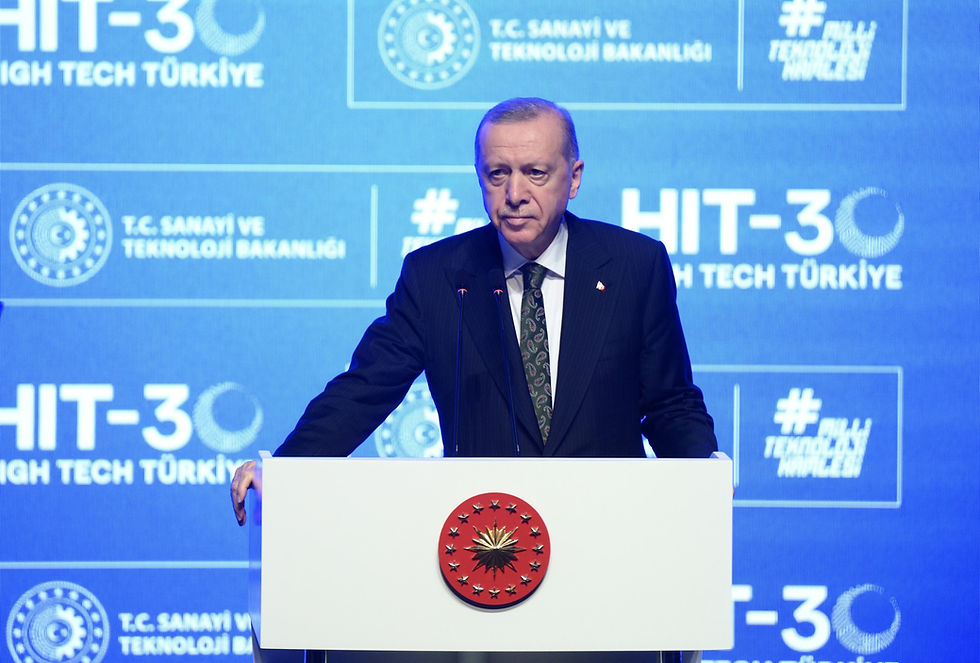
The program was announced by President Recep Tayyip Erdoğan in Istanbul and is led by Türkiye's Ministry of Industry and Technology. It includes tax incentives, grants, market development support, employment facilitation and access-to-land support for qualified high-technology investments. One of the most important targets is semiconductor production, with Türkiye planning a US$5 billion incentive package for a semiconductor chip factory.
HIT-30 also includes major packages for adjacent industries. Türkiye announced US$5 billion to support electric vehicle production, US$4.5 billion for battery technologies with a target of 80 GWh capacity by 2030, US$2.5 billion for solar cell production and US$1.7 billion for critical wind-energy components. These sectors are closely connected to semiconductor demand because they require power electronics, sensors, MCUs, industrial control systems, battery management systems and advanced manufacturing equipment.
The program follows Türkiye's broader push to move from conventional manufacturing into higher-value technology production. The country already has a strong industrial base in automotive, white goods, defense, machinery and electronics assembly. HIT-30 is designed to build on that base by attracting manufacturers that can localize advanced production and reduce dependence on imported strategic technologies.
For the semiconductor sector, the opportunity is not limited to wafer fabrication. Türkiye's industrial base can also support packaging, testing, electronic module assembly, power semiconductor integration and production equipment ecosystems. This is especially relevant for automotive electronics, industrial automation, energy systems and defense platforms, where localized supply chains and long-term component availability are becoming increasingly important.
Türkiye's position between Europe, the Middle East and Asia gives the program an additional supply-chain dimension. As manufacturers seek more resilient production footprints, Türkiye is positioning itself as a high-technology manufacturing location with access to regional export markets, skilled engineering talent and established industrial zones.
HIT-30 also has implications for the companies that will support the growth of Türkiye's electronics manufacturing ecosystem. As investment flows into semiconductor production, advanced electronics and industrial technologies, manufacturers will require access to a broader range of components, technologies and technical expertise throughout the design and production process. With an established presence in Türkiye and partnerships spanning the global semiconductor industry, McKinsey Electronics is positioned within the ecosystem supporting the development of these next-generation manufacturing capabilities.