
September 2026 Updates for Design Engineers
Read the latest semiconductor and electronics news and updates.
In this edition:
Critical-Material Constraints Continue to Test the Electronics Supply Chain
Egypt Introduces Seven-Year Export Support for Semiconductor Design and Embedded Systems
Hyundai Starts IONIQ 3 Production as Türkiye Deepens EV Manufacturing
Morocco Deploys Large-Scale Battery Storage for Industrial Renewable Power
MARKET & SUPPLY CHAIN
Critical-Material Constraints Continue to Test the Electronics Supply Chain
Three years after China introduced export controls on gallium and germanium, supply conditions remain constrained, and prices are significantly above their 2023 levels. China accounts for approximately 98.9% of global gallium production and 68.6% of germanium production, leaving several advanced-technology supply chains exposed to a highly concentrated production base.

Both materials have important electronics applications. Gallium is used in compound semiconductors supporting RF, optical-communication and power-electronics devices, while germanium is used in fiber-optic systems, infrared technologies and specialized semiconductor materials.
New production projects, recycling and alternative sourcing are beginning to develop outside China, but commercial-scale expansion will take time. Gallium and germanium are often recovered as by-products of processing other materials, making it difficult to increase production independently or quickly.
Substitution is also not straightforward. Changing semiconductor materials can affect electrical performance, thermal behavior, packaging, reliability and qualification requirements. An available alternative may therefore require circuit changes, additional testing or renewed approval before it can be introduced into an existing design.
For engineering and procurement teams, the immediate priority is to identify where these materials appear within selected components, monitor category-level availability and evaluate technically acceptable alternatives before constraints affect active designs. McKinsey Electronics supports customers identify BOM exposure, evaluate component alternatives from authorized manufacturers and support the technical qualification needed before a design change.
CXMT Moves Its Latest DRAM Platform into Mass Production
Chinese memory manufacturer CXMT says its fifth-generation DRAM technology platform has entered mass production, marking another step in China’s effort to develop a more independent semiconductor supply chain.

The new platform uses quadruple patterning to reduce the spacing of key memory-cell features to approximately 11.95 nanometers. CXMT says this greater density enables more memory to be integrated into each chip while increasing the potential number of chips produced from each silicon wafer.
CXMT also introduced two 24-gigabit LPDDR5X products designed primarily for smartphones and other portable electronics. According to the company, the devices provide 50% more capacity than its previous equivalent products while supporting lower-power operation.
The manufacturer reports that the platform can produce at least 50% more gross dies per wafer than its fourth-generation process. This figure represents the potential number of chips produced before defective devices are removed during testing, so it should not be interpreted as a confirmed 50% improvement in final production yield.
The development could increase competitive pressure and influence global DRAM supply dynamics in a market led by Samsung, SK Hynix and Micron. Its wider impact will depend on production yield, product qualification, customer adoption, applicable trade restrictions and CXMT’s ability to scale output consistently.
REGIONAL MANUFACTURING
Egypt Introduces Seven-Year Export Support for Semiconductor Design and Embedded Systems
Egypt has expanded its Export Development Program to include electronics design, semiconductor engineering, embedded systems and mobile-related technology services. The seven-year framework began in fiscal year 2025/2026 and is intended to strengthen high-value technology exports while attracting further investment into the country’s electronics sector.
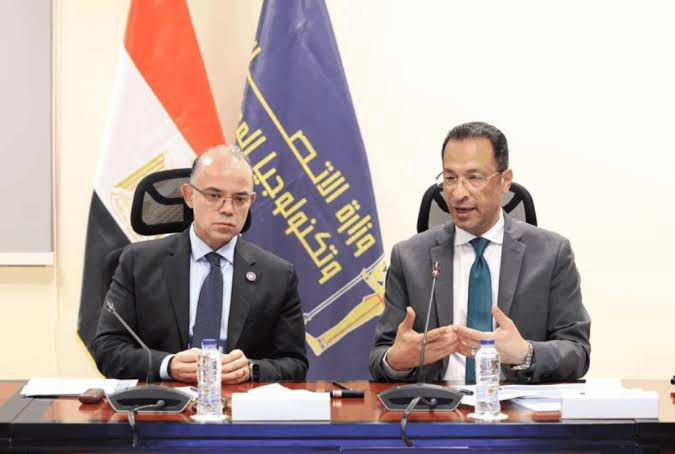
Under the program, eligible Egyptian and international companies operating in Egypt can receive performance-based financial support connected to actual export growth. ITIDA states that qualifying companies may receive a cash incentive equal to 20% of the year-over-year increase in collected export proceeds. Companies operating under Egypt’s Free Zones system are eligible for 50% of the standard calculated incentive.
The framework is particularly relevant to design-intensive activities that can be developed without immediately establishing large-scale wafer-fabrication capacity. Integrated-circuit design, embedded software, verification, prototyping and related engineering services require specialized talent and access to international customers, but considerably less capital than building and operating a semiconductor fab.
Egypt is supporting the export incentives through broader programs focused on workforce development and semiconductor prototyping. ITIDA’s initiatives include specialized training for semiconductor and embedded-systems roles, as well as support intended to reduce the cost of integrated-circuit prototyping and tape-outs.
The program does not mean that Egypt has established domestic large-scale chip production. It instead strengthens the earlier stages of the electronics value chain, where local engineering teams can design, develop and export intellectual property, embedded systems and specialized technology services. As this design activity expands, the McKinsey Electronics engineering team can support companies in evaluating component options and connecting product development requirements with its authorized manufacturer portfolio.
Hyundai Starts IONIQ 3 Production as Türkiye Deepens EV Manufacturing
Hyundai Motor Türkiye is expanding its İzmit operation to support electric-vehicle production and local battery-pack assembly. The program forms part of an approximately $816 million investment package intended to prepare the facility for the IONIQ 3 and future electrified models.

Of the total investment, approximately $63 million has been allocated to a battery-assembly facility being developed with Hyundai Mobis. The planned operation will assemble externally sourced battery cells into completed packs using automated systems, bringing battery integration closer to vehicle production. Local pack assembly does not mean local cell production. The first phase is expected to create more than 300 jobs.
Hyundai officially marked the start of IONIQ 3 production at its İzmit plant in August 2026. The launch followed a €250 million upgrade to prepare the plant for electric-vehicle production. The battery-pack assembly facility is a separate part of the wider investment program and remains under development.
The investment is significant because electric-vehicle manufacturing requires a broader electronics base than conventional vehicle assembly. Battery-management systems, power semiconductors, onboard chargers, DC/DC converters, thermal-control electronics, sensors, connectors and vehicle-control units all become increasingly important as production shifts toward electric platforms.
For Türkiye, the strategic value extends beyond assembling a new vehicle model. Locating battery-pack integration alongside vehicle production can help develop specialized manufacturing skills, increase automation capabilities and create a stronger foundation for local suppliers to participate in future electric-vehicle programs.
The shift toward electric-vehicle and battery-pack production increases requirements for automotive-qualified power semiconductors, protection devices, sensors, connectors and control components. Battery cells sourced from outside Türkiye make pack integration, testing and supplier coordination particularly relevant to the local supply chain.
INFRASTRUCTURE BEHIND THE INDUSTRY
Saudi Arabia Expands AI Infrastructure Capacity at Oxagon
HUMAIN and DataVolt have begun developing 100 MW of AI-ready data center capacity at Oxagon, NEOM’s industrial city on Saudi Arabia’s Red Sea coast. Announced at LEAP 2026, the project has moved beyond planning, with construction now underway and the first 100 MW expected to become available in 2028.

The development forms part of the 360 MW first phase of DataVolt’s planned campus at Oxagon. The wider site is ultimately intended to reach 1.5 GW, although capacity beyond the first phase remains part of the longer-term development plan.
The facility is being designed for high-density computing clusters capable of supporting large-scale AI and cloud workloads. Current plans include renewable energy integration, advanced cooling technologies and access to subsea cable infrastructure connecting the region with Europe and Africa.
The project’s significance extends beyond the additional computing capacity. AI data centers place intensive requirements on power conversion, backup energy, circuit protection, thermal management, high-speed connectivity and real-time monitoring. The ability to operate these systems reliably will be as important as the availability of computing hardware itself.
For Saudi Arabia, the development represents a shift from announcing AI ambitions to constructing the physical infrastructure required to support them. Its power, protection, connectivity, sensing and control requirements align with technologies available through McKinsey Electronics’ authorized manufacturer portfolio, supported by regional engineering expertise during system design and component selection.
Morocco Deploys Large-Scale Battery Storage for Industrial Renewable Power
OCP Green Energy has energized a 25 MW/125 MWh lithium iron phosphate battery energy storage system at its Benguerir mining operation. The installation can store up to five hours of electricity, allowing solar power generated during the day to be used during periods of higher demand.

The system uses technology supplied by Envision Energy and forms part of OCP Green Energy’s renewable-power program. Its initial solar portfolio includes 202 MWp of capacity distributed across Benguerir, Foum Tizi and Oulad Farès, supplying mining, industrial and desalination operations.
The battery system has been energized and connected, but it is still progressing through testing and phased commissioning. Commercial operation will begin after those procedures have been completed, making the distinction between energization and full operation important when assessing the project’s status.
By shifting surplus solar generation into peak-demand periods, the installation is intended to improve renewable-energy use, reduce exposure to peak electricity costs and provide greater flexibility for an active industrial site. It also gives Morocco practical experience in integrating large-scale battery storage with renewable generation and industrial loads.
Deploying storage at this scale depends on more than battery cells. Battery-management systems, power-conversion equipment, protection devices, current and temperature sensing, high-power connectors and industrial control systems all influence safety, efficiency and operating life. Power density, electrical isolation, thermal performance, protection coordination and long-term component availability must all be addressed before such systems reach deployment.