
December 2025 Updates for Design Engineers
Read the latest semiconductor and electronics news and updates.
In this edition:
Semicon Summit 2025 - Powered by McKinsey Electronics
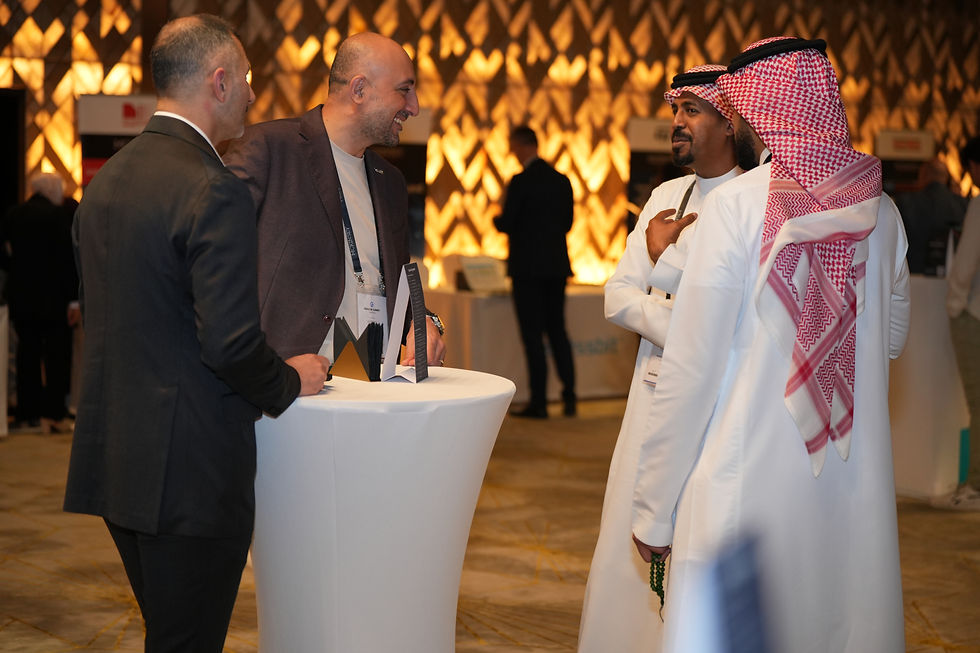
The Semicon Summit 2025, hosted by McKinsey Electronics, took place on 9–10 December 2025 at Sofitel Dubai The Obelisk, bringing together global semiconductor and electronic-component manufacturers with regional engineering, sourcing, and technology leaders from across the GCC, Africa, and Türkiye.
Over two focused days, the Summit addressed real-world design, qualification, and deployment challenges across key growth sectors, including AI hardware, electric vehicles, aerospace, energy, defense, and industrial electronics. The emphasis was clear: practical system-level discussions over isolated component conversations.
A Full-System View of the Electronics Value Chain
The event welcomed 20+ international manufacturers, representing a broad cross-section of the electronics ecosystem. Participating companies included STMicroelectronics, Renesas, Amphenol, Keysight Technologies, Würth Elektronik, Samtec, Marvell, ams OSRAM, Qorvo, Swissbit, BPM Microsystems, Epson, Diotec, Quectel, Energizer, alongside other specialists in power electronics, connectivity, sensing, test and measurement, embedded computing, and electronics manufacturing solutions.
This breadth enabled attendees to engage across complete system architectures—from processing and memory to interconnect, power, sensing, and validation—rather than viewing technologies in isolation.
Depth of Engagement Over Scale
The Summit’s success was driven not by attendance alone, but by the quality of technical interaction. The agenda combined manufacturer roadmap sessions, hands-on product demonstrations, and pre-scheduled one-to-one meetings, allowing engineers and sourcing teams to discuss active projects, qualification paths, and near-term deployment plans directly with manufacturers’ technical experts.
Feedback from participating manufacturers reinforced the Summit’s practical value. Holger Weißel, Regional Sales Manager at Swissbit, described the event as “exceptionally well organized and highly valuable,” highlighting its role as “an excellent platform to engage with potential customers and exchange insights on where the semiconductor and industrial storage sectors are heading.”
Ibrahim Chamali, Head of Middle East Operations at Würth Elektronik, emphasized the broader ecosystem momentum, noting the “remarkable level of government investment in Saudi Arabia and the UAE” and underlining that the Summit “brings together manufacturers, innovators, and policymakers in the environment needed for real industrial progress.”
From the application side, Beshoy Nabih, R&D Electrical Manager at Siraj – Flare Lighting, highlighted the Summit’s practical value, stating that “our main vision for joining the Semicon Summit was to connect with new suppliers and explore active and passive semiconductor components that can be implemented within our industry—and that vision was achieved.”
Early Design Engagement as a Strategic Priority
A recurring theme throughout the Summit was the importance of early engagement in the design cycle. Discussions frequently extended beyond product features into supply continuity, qualification planning, and regional technical support—areas that are increasingly critical as infrastructure, defense, and industrial programs scale across the region.
By facilitating direct collaboration between global manufacturers and regional decision-makers, Semicon Summit 2025 reinforced Dubai’s role as a practical meeting point for semiconductor ecosystem alignment—where global technology roadmaps are translated into deployable, region-ready solutions.
McKinsey Electronics looks forward to building on this momentum in the next edition of the Summit.
To stay updated on upcoming announcements and initiatives, Register to receive our monthly newsletter today.
Qatar Accelerates AI and Data-Center Ambitions

Qatar announced plans on 17 December 2025 to scale its AI and data-center infrastructure, leveraging low-cost electricity and sovereign-fund backing to compete more aggressively for hyperscalers and advanced compute workloads. As AI data centers adopt dense GPU-based architectures, power availability and cooling efficiency are becoming critical differentiators across the Gulf.
The strategy builds on AI and infrastructure initiatives backed by Qatar Investment Authority, including large-scale data-center investments involving Brookfield Asset Management. These facilities are expected to support AI training and inference workloads relying on advanced accelerators, high-bandwidth memory, and low-latency networking.
Despite the energy advantage, challenges remain. Access to advanced semiconductors is constrained by U.S. export controls, while data governance frameworks and the availability of specialized AI and system engineering talent will influence how quickly projects move from announcement to operation.
From an electronics and semiconductor perspective, AI infrastructure expansion increases demand for high-performance compute platforms, power electronics, liquid and hybrid cooling solutions and high-speed optical connectivity. Reliability, power efficiency and thermal management are especially critical in large-scale deployments operating in high-temperature environments.
Through its expansive line card of global manufacturers, McKinsey Electronics can support this growth by enabling access to qualified semiconductor technologies, power and thermal solutions and system-level expertise that help accelerate reliable AI infrastructure deployment in the region.
Africa's Drone Boom Draws Global Defense Tech Attention

At the Egypt Defense Expo (EDEX) in Cairo, defense manufacturers presented a broad range of drone and counter-drone systems, reinforcing Africa and the Middle East as fast-growing markets for unmanned platforms and electronic-warfare technologies. The exhibition highlighted the growing operational reliance on UAVs and the parallel need for effective detection, tracking and neutralization capabilities.
Showcased solutions focused on AI-enabled navigation, autonomous control and platforms designed to operate in GPS-denied and electronically contested environments. Counter-drone systems demonstrated layered approaches combining RF detection, radar, electro-optical sensing, signal interception and electronic countermeasures, all architectures shaped by recent conflict experience where electronic resilience has proven critical.
The prominence of counter-drone technologies underlined a broader shift toward electronics-centric defense systems. Sensors, RF components, embedded processors, secure communications and power-management systems now form the backbone of both offensive and defensive platforms. Resistance to jamming and spoofing is increasingly treated as a baseline requirement influencing system design and component selection.
Beyond technology demonstrations, EDEX also advanced Egypt’s ambition to become a regional defense and aerospace manufacturing hub. Announcements around local production and assembly point to rising demand for qualified electronic components, testing capabilities and compliant supply chains as localization efforts expand. This environment continues to reinforce the role of McKinsey Electronics’ component distribution presence across North and South Africa in supporting defense and aerospace supply chains.
Türkiye and Hungary Deepen Technology Ties

Türkiye and Hungary signed 16 cooperation agreements covering science, technology, industry, innovation, investment and metrology during a bilateral meeting held on 8 December 2025. The agreements were concluded under the framework of intergovernmental cooperation between the Ministry of Industry and Technology of Türkiye and the Ministry of Culture and Innovation of Hungary, to expand structured collaboration in research, industrial development and technical standards.
A key component of the agreements relates to metrology and measurement sciences, involving Türkiye’s TÜBİTAK National Metrology Institute (UME) and Hungary’s Hungarian Trade Testing and Certification Institute. The cooperation framework covers calibration, measurement traceability and alignment of technical standards, all areas that directly support regulated industries requiring high-precision testing and certification.
The agreements also outline cooperation in applied research, industrial R&D and innovation programs, with a focus on advanced manufacturing sectors. These include electronics, precision engineering, automotive systems, aerospace technologies and industrial automation. Provisions include joint research activities, researcher and expert exchanges, and coordination between national laboratories and innovation institutions.
In addition to research and standards, the cooperation package addresses industrial development and investment facilitation, aiming to support cross-border industrial projects and technology-oriented value chains. The agreements provide a formal basis for future joint programs, shared laboratory use and institutional coordination, pending implementation through sector-specific working groups and follow-up protocols.